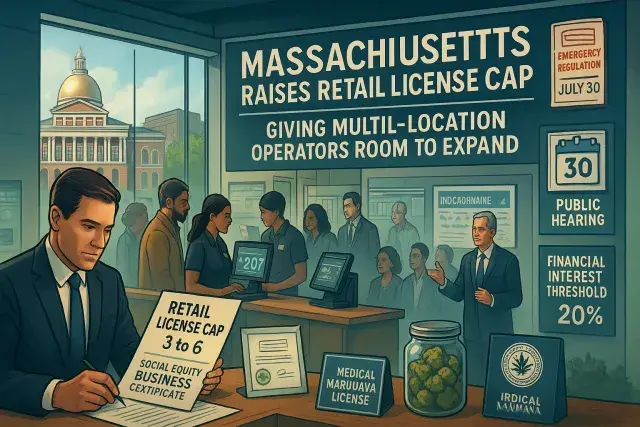
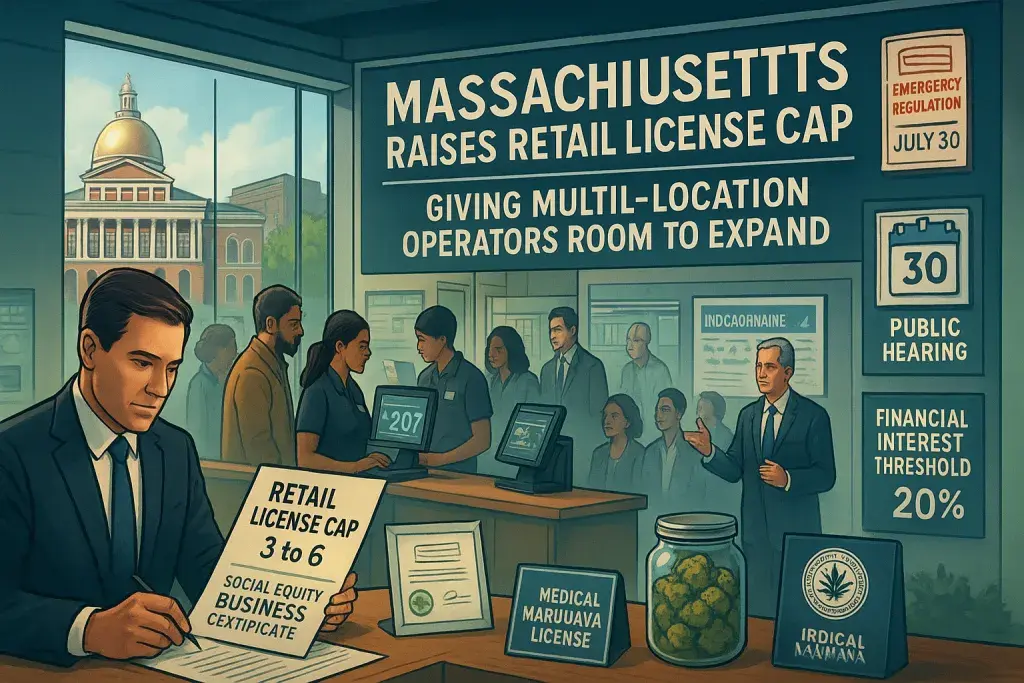
The Massachusetts Cannabis Control Commission moved Wednesday to double the number of retail licenses a single cannabis operator can hold, adopting emergency regulations that raise the cap from three to six store licenses. The CCC acted under a statutory deadline embedded in the state's broader marijuana industry overhaul, voting unanimously to put the new rules into effect immediately rather than wait out the standard rulemaking timeline. The regulations are now in effect for 90 days while the agency collects public input ahead of a formal public hearing set for July 30.
For operators tracking licensing strategy across multiple regulated markets, the timing matters. Multi-location retail groups have long pressed Massachusetts regulators on the three-license ceiling, which constrained store-count growth even for well-capitalized operators with clean compliance records. The emergency regulatory path the CCC chose - filing directly with the Secretary of State and triggering a three-month comment window - is a familiar mechanism in regulated industries when statutory deadlines outpace standard administrative timelines. Dispensary technology vendors and compliance platforms serving Massachusetts retailers, alongside tools serving operators in other regulated states like IndicaOnline Virginia, will need to monitor how the new license structures affect operational configurations, reporting obligations, and any seed-to-sale tracking requirements tied to individual license entities.
Here's the catch, though: the path to six licenses isn't identical for every operator. For the first 12 months the regulations are in effect, only social equity businesses are eligible to hold up to six retail licenses. Non-social equity licensees are capped at five during that period. That tiered access is deliberate - Massachusetts has built social equity preference windows into its licensing structure before, and this follows the same logic. A single licensee can also hold up to three fully integrated medical marijuana licenses, which matters for operators running vertically integrated operations that span cultivation, processing, and retail under a medical program alongside adult-use retail. On the financial interest side, the threshold that triggers a license count attribution rises from 10% to 20%, provided the investor doesn't hold direct or indirect control over the licensed entity. That's a meaningful change for holding structures and investment vehicles active in the Massachusetts market.
What the Purchase Limit Update Means at the Counter
Separate from the licensing changes, the CCC formally updated regulations to reflect a purchase limit increase that was already law: Massachusetts consumers can now purchase up to two ounces of cannabis per transaction, up from one ounce. The regulatory update is largely administrative - the underlying law already changed the limit - but formalizing it in regulation matters for compliance documentation, staff training, and point-of-sale system configuration. Dispensary operators will need to confirm their POS terminals and inventory management systems are reflecting the updated transaction ceiling accurately. Compliance logs, delivery manifests, and budtender training materials should all be updated to reflect the new limit. This is the kind of operational detail that can create exposure in a compliance audit if it's treated as a paperwork formality rather than an active update.
A Rulemaking Process That's Far From Finished
CCC Chair Chris Harding characterized Wednesday's action as "just the beginning of a comprehensive policymaking process that will unfold over the next year." That framing is worth taking at face value. The emergency regulations carry a three-month effective window, after which the CCC will need to finalize permanent rules through the standard administrative process. Commissioners have also indicated they expect to update regulations again in the fall to address other policies embedded in the broader cannabis reform law. The agency said it will update internal infrastructure before it begins accepting new applications tied to the higher license cap - meaning operators eager to apply for a fourth, fifth, or sixth location shouldn't expect to file immediately.
Written comments are accepted from July 3 through July 30. The public hearing is scheduled for July 30. Operators, investors, social equity applicants, and compliance professionals with a stake in how the final rules are written should treat that window seriously. Emergency regulations adopted under deadline pressure have a way of hardening into permanent policy if the comment record is thin. The decisions made in the next few months - about how financial interest thresholds are interpreted, how social equity status is verified at the six-license tier, and how the medical license cap interacts with adult-use retail structures - will shape Massachusetts cannabis retail economics for years.