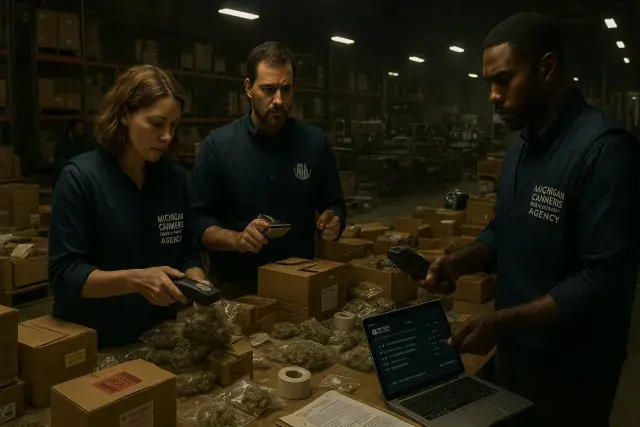
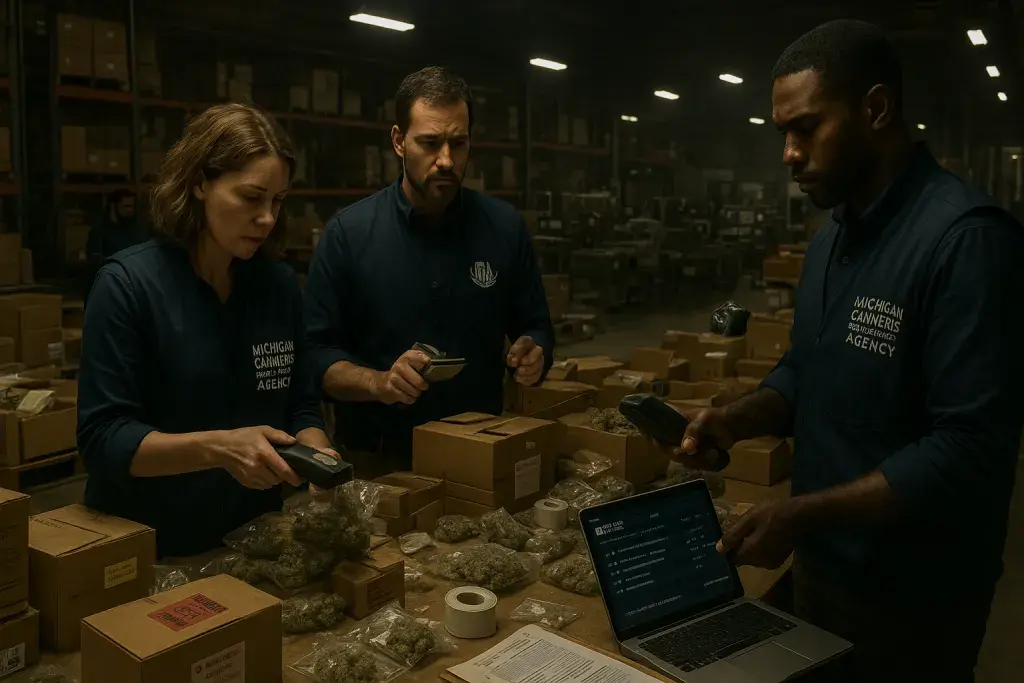
A Michigan cannabis processor is facing serious licensing consequences after state inspectors found more than 12,000 individual cannabis products without Metrc tags or any other identifying information at its Harrison Township facility. The Michigan Cannabis Regulatory Agency filed a formal complaint against VJAS 1, alleging the unlabeled inventory included products in California-specific packaging - a detail that raises immediate questions about illicit supply chain activity. VJAS now faces potential fines, license suspension, revocation, restriction, or refusal of renewal.
What makes this case particularly striking is the scale. Twelve thousand-plus untagged units isn't a clerical slip or a labeling error on a single batch - it's a systemic inventory failure that seed-to-sale tracking systems like Metrc are specifically built to prevent. States across the country have adopted Metrc or comparable track-and-trace platforms precisely because gaps in chain-of-custody documentation create entry points for unlicensed product. Operators in other regulated markets - including those relying on dispensary pos software maryland to maintain real-time inventory alignment with state systems - understand that every unit in a licensed facility must carry a verifiable tag from cultivation or processing through the final point of sale. An inability to account for inventory at any stage is, under most state frameworks, an automatic compliance breach.
The California packaging detail is the part that warrants the most attention. Finding products labeled for another state's market inside a Michigan-licensed processing facility isn't easily explained by administrative error. California cannabis packaging must include state-specific warning language and regulatory compliance markings that aren't required in Michigan - and wouldn't appear by accident. When inspectors found those items, they weren't just looking at untagged product; they were potentially looking at product manufactured for or sourced from an entirely different regulated market. Interstate cannabis commerce remains federally prohibited, full stop. A licensed Michigan operator holding what appears to be California-market product has a significant problem on its hands, and "we don't know how they got here" is not a workable answer to a formal enforcement investigation.
The Metrc Cross-Reference Problem
The complaint's secondary finding compounds the first. Investigators did locate some products at the VJAS facility that carried legitimate Metrc tags - but when those tags were cross-referenced against the state's seed-to-sale system, the inventory records showed those products should have been at other licensed cannabis businesses entirely. That's not a paperwork gap. That's product appearing in the wrong facility under someone else's Metrc entries, which suggests either improper transfers between licensees, falsified compliance records, or both. Regulators treat this kind of discrepancy seriously because the tracking system only works if the physical location of every tagged unit matches its digital record.
For other Michigan operators - and for processors and retailers in any Metrc-integrated state - this is a useful reminder of what routine compliance audits are actually checking. It isn't enough to have tags on products. Those tags have to be accurate, current, and matched to the physical location logged in the system. Inventory reconciliation between a facility's internal records, its point-of-sale or inventory management platform, and the state's Metrc database needs to happen consistently, not only when an inspection is scheduled. Discrepancies accumulate when teams skip reconciliation steps, and a single inspection can surface months of misaligned data at once.
What Licensed Operators Should Take From This
The VJAS complaint is a straightforward enforcement action at the surface level - but the underlying failures it describes are operational, not just regulatory. Employees at the facility reportedly couldn't explain the untagged inventory to inspectors. That's a training and accountability gap as much as a compliance one. In a licensed cannabis operation, every staff member who handles product should understand the chain-of-custody requirements attached to that product. If floor-level employees can't answer basic questions about why inventory lacks documentation, management hasn't built the internal compliance culture that regulators expect.
The potential penalties here - fines, suspension, revocation, or license non-renewal - represent an existential risk to the business. Processors occupy a specific and economically valuable position in the supply chain; losing a processing license doesn't just hurt that entity's revenue, it disrupts the downstream flow of product to the retail licensees it supplies. That's a reminder that compliance failures at the wholesale and processing tier have ripple effects that reach the dispensary floor. Retailers sourcing from processors under active enforcement scrutiny should be paying attention to their supplier's compliance status - and asking questions if they aren't already.