Iowa's gubernatorial race has turned, at least partly, into a referendum on whether the state should finally join its neighbors in regulating adult-use cannabis. Democratic nominee Rob Sand used a Wednesday debate to press the case again, framing legalization as both a budget fix and a law enforcement relief valve. His Republican opponent, Zach Lahn, who opposes legalization, didn't engage the topic on stage - a silence that itself says something about how the issue is being triaged by each campaign.
The Fiscal Argument, and Why It's More Complicated Than It Sounds
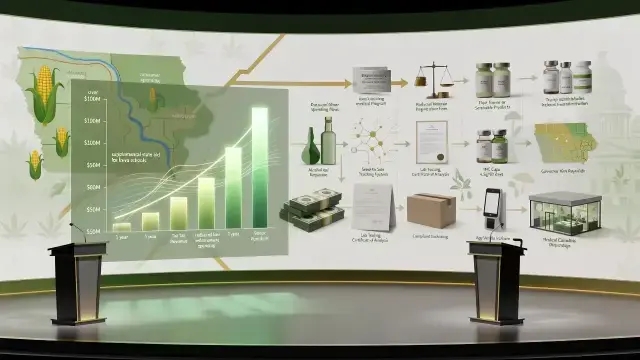
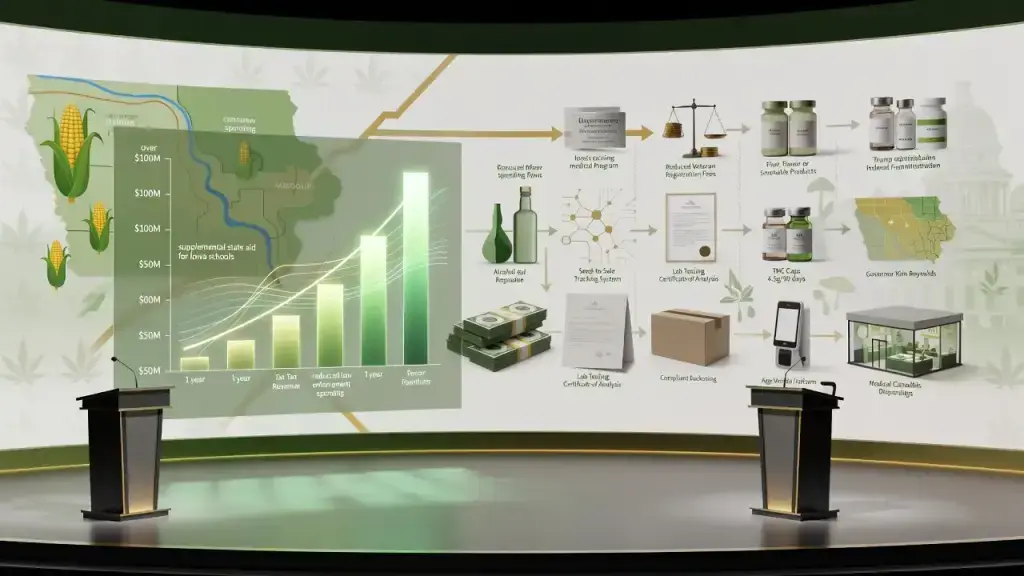
Sand's pitch is straightforward: tax cannabis the way Iowa taxes alcohol, funnel the proceeds toward supplemental state aid for schools, and stop spending enforcement dollars on conduct he considers comparable to drinking a beer. He's floated $50 million in first-year revenue, climbing past $100 million in subsequent years. That sounds tidy on paper, but any operator who's watched a new adult-use market open knows the ramp-up is rarely linear. Licensing timelines, build-out costs, testing infrastructure, and initial product scarcity all slow the early revenue curve. States that legalized adult-use sales typically saw modest first-year tax collection before volume caught up - a pattern Iowa would likely repeat if lawmakers ever acted on Sand's proposal.
What a New Adult-Use Market Would Actually Require
Legalizing cannabis "like alcohol" is a political shorthand, not a regulatory blueprint. In practice, though, building a functioning adult-use system means standing up the infrastructure Iowa's medical program only partially has: seed-to-sale tracking, lab testing protocols with certificates of analysis, compliant packaging standards, age verification at point of sale, and a licensing framework that decides who gets to grow, process, and retail. None of that exists overnight. For prospective operators and investors watching from Illinois or Missouri - states Sand specifically cited as where Iowa consumers currently spend their money - the question isn't just whether Iowa legalizes, but how quickly it can build a compliance apparatus sturdy enough to survive legislative scrutiny and public safety concerns.
Medical Program Changes Are the More Immediate Development
While the governor's race debates hypothetical adult-use revenue, Iowa's existing medical cannabis program is undergoing real, near-term changes. The Department of Health and Human Services is circulating proposed rules to drop the residency requirement for patient registration and to guarantee reduced registration fees for military veterans - both tied to legislation Gov. Kim Reynolds signed in June. That same law doubles the number of permitted dispensary licenses, a response to a 2023 recommendation from the Iowa Medical Cannabidiol Board that more outlets were needed for geographic access. For existing medical cannabis operators, more licenses mean more competition for patient volume in a market still capped at 4.5 grams of THC per 90 days, with no flower or smokable products allowed. That's a narrow product mix to build a business around, and doubling dispensary count without expanding the patient pool or product categories puts real pressure on per-store economics.
Psilocybin and the Broader Pattern of Incremental Reform
Iowa lawmakers also considered, and didn't pass, a state-regulated psilocybin program for PTSD patients this session - a reminder that Iowa's reform posture tends toward caution. Reynolds vetoed earlier psilocybin legislation last year, arguing it ceded state authority to federal scheduling decisions. That instinct - wait for federal clarity before committing state infrastructure - is the same dynamic shaping the cannabis debate. Sand has praised the Trump administration's movement toward rescheduling marijuana, but rescheduling and state-level adult-use legalization are separate legal tracks with separate compliance consequences, including how 280E tax treatment and banking access might eventually shift. Operators should treat federal rescheduling news as directionally useful, not as a signal that Iowa adult-use licensing is imminent. For now, the medical program's rule changes are the only concrete regulatory movement on the table; everything else remains campaign rhetoric until a legislature votes.