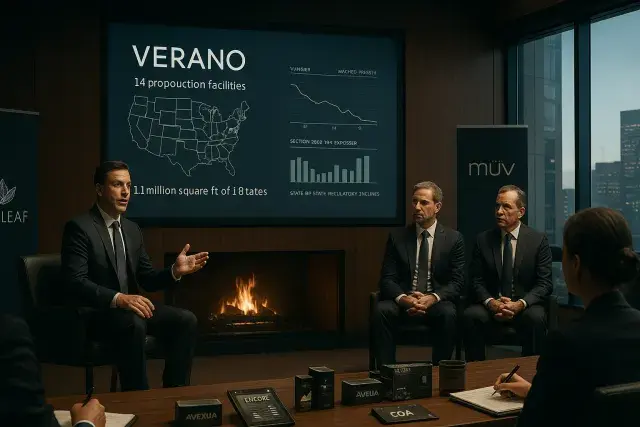
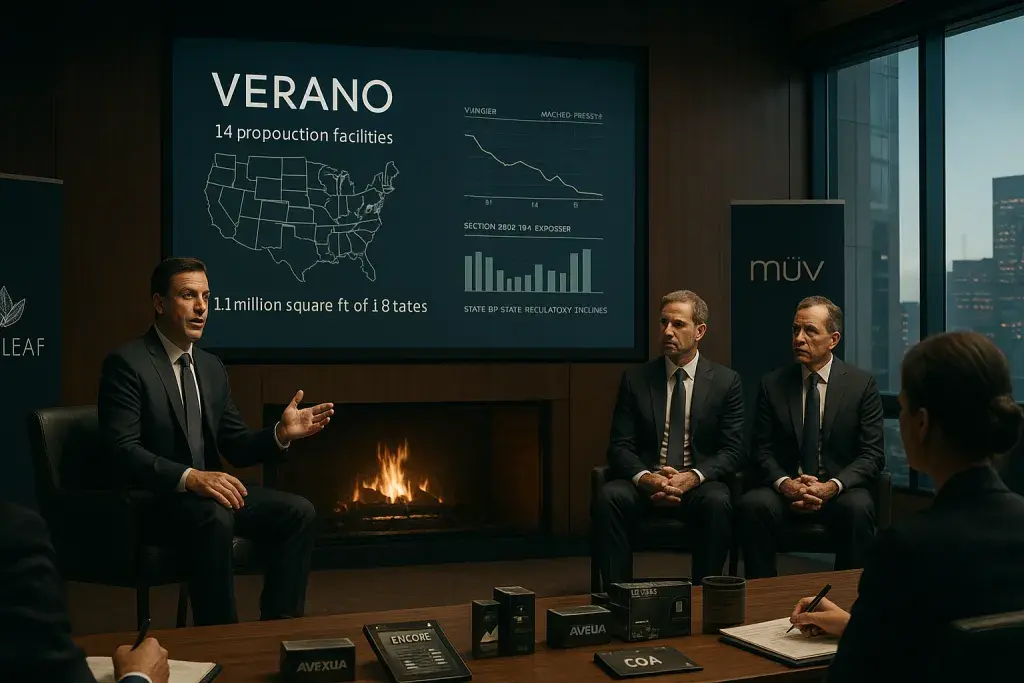
Verano Holdings Corp. will send members of its executive leadership team to the Canaccord Genuity 46th Annual Growth Conference in Boston on August 11, 2026, where the company plans a fireside chat and a round of investor meetings. It's a routine stop on the institutional investor circuit, but for a multi-state cannabis operator like Verano, these appearances carry weight beyond the polite Q&A. Investors watching this sector want to hear how operators are managing margin pressure, tax exposure under Section 280E, and the slow grind of state-by-state regulatory change.
That scrutiny matters because Verano's business model depends on operational consistency across a patchwork of state cannabis programs, each with its own licensing structure, testing requirements, and point-of-sale compliance rules. Retail banners like Zen Leaf and MÜV have to run seed-to-sale tracking, manage compliant packaging standards, and reconcile inventory against state systems such as METRC - all while keeping budroom shelves stocked and checkout lines moving. In markets like Colorado, where regulatory reporting is tightly integrated with point-of-sale infrastructure, operators increasingly rely on specialized platforms; POS software for Colorado cannabis retailers has become less of a convenience and more of a compliance necessity, since transaction data feeds directly into state audit trails. Get that wrong, and the fallout isn't just an inventory headache - it's a license risk. POS software for Colorado cannabis retailers
Why Investor Conferences Carry Operational Weight
Fireside chats at growth conferences aren't just marketing theater, even if they can look that way from the outside. Analysts use these sessions to probe how companies like Verano are managing wholesale pricing pressure, cultivation capacity utilization, and the cash-flow strain that comes from operating in a federally illegal industry where standard banking access remains limited. Verano's disclosed footprint - 14 production facilities spanning more than 1.1 million square feet across 13 states - gives the company scale, but scale in cannabis cuts both ways. More facilities mean more compliance logs, more state inspections, and more exposure to shifts in local zoning or licensing caps.
What Multi-State Operators Are Really Signaling
When an operator's leadership prioritizes investor meetings over, say, retail expansion announcements, it tends to reflect where the capital markets currently sit on cannabis equities: cautious, selective, and demanding operational discipline over growth-at-any-cost narratives. Verano's brand portfolio, spanning consumer lines like Encore, Avexia, and Savvy, depends on wholesale relationships and SKU management that have to hold up under lab testing and COA verification in every state where those products are sold. For dispensary buyers and wholesale partners watching this sector, executive participation in events like Canaccord's growth conference is a signal worth reading, not just a calendar item - it often precedes shifts in capital allocation, store footprint, or supply chain strategy that ripple down to retail partners and suppliers alike.