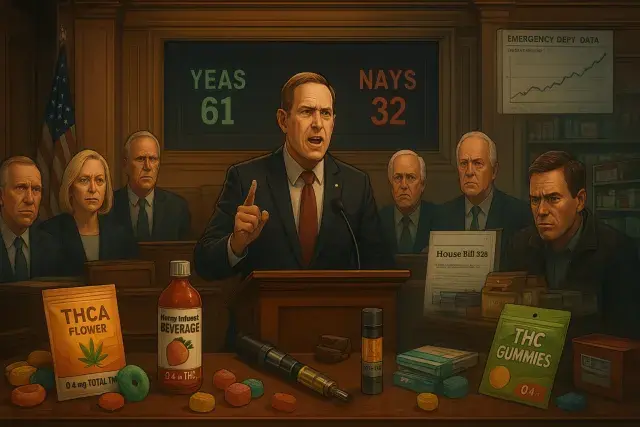
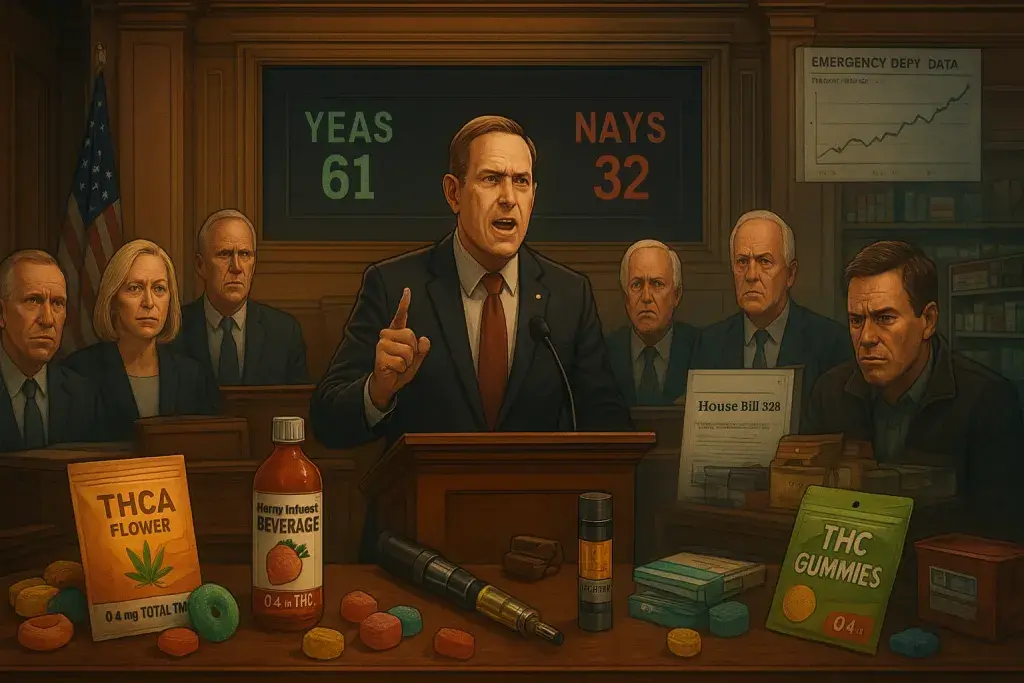
A push to strip a 30-day delay from the Senate's continuing resolution failed on Aug. 8, when senators voted 61-32 to table an amendment from Sen. Ted Budd, R-N.C., that would have kept the Nov. 12 effective date for federal intoxicating hemp restrictions fully intact. The vote crossed party lines - 21 Republicans and 11 Democrats opposed tabling the measure - and it left in place a one-month reprieve, now running through Dec. 11, for retailers currently selling hemp-derived THC products nationwide.
For dispensary operators and hemp retailers alike, the practical stakes are significant regardless of party lines. A federal definition change tied to total THC content, rather than delta-9 THC alone, would exclude most finished products containing more than 0.4 milligrams of combined THC and similar cannabinoids per container - effectively removing a wide swath of gummies, beverages, vapes, and THCA flower from shelves that currently operate outside state-licensed cannabis frameworks. Operators in adjacent regulated markets are watching closely, since compliance infrastructure built for licensed cannabis - inventory tracking, SKU management, age verification at point of sale - could become the template hemp retailers are forced to adopt on short notice. Multi-state operators already running platforms such as cannabis POS for Oklahoma dispensaries understand this dynamic well: seed-to-sale accountability isn't optional once a product category gets folded into a THC threshold, and retailers who haven't built that discipline into daily operations tend to get caught flat-footed when compliance deadlines arrive. cannabis POS for Oklahoma dispensaries
Why the Delay Matters Operationally
Thirty days sounds like a rounding error in a regulatory calendar. In practice, though, it's the difference between an orderly wind-down and a scramble. Retailers carrying intoxicating hemp products - convenience stores, smoke shops, grocery chains - would need to audit wholesale menus, pull noncompliant batches, and in some cases renegotiate supplier contracts on compressed timelines. Brands manufacturing at scale face similar pressure on reformulation and compliant packaging redesign. The delay embedded in Section 2019 was framed by supporters, including a coalition of 105 organizations that wrote to Senate leadership, as breathing room for Congress to legislate a regulatory structure rather than simply zero out a market segment.
Budd and his 14 cosponsors - a bipartisan group spanning Thom Tillis, Kirsten Gillibrand, John Cornyn, and Mitch McConnell - rejected that framing outright. Budd's central argument leaned on child-safety data from North Carolina showing a steep rise in cannabis-related emergency department visits among minors, and on the packaging tactics used by some intoxicating hemp brands that mimic mainstream snack and candy branding. That argument put him at odds with the White House, which reportedly lobbied against the amendment directly, and with CMS Administrator Dr. Mehmet Oz, who warned that abrupt implementation could disrupt access to full-spectrum hemp-derived CBD products for seniors and people with disabilities.
North Carolina's Parallel Standoff
The federal fight has a mirror image playing out in Raleigh. House Bill 328 would write the same 0.4-milligram total THC threshold directly into North Carolina statute, along with a ban on synthetic and chemically converted cannabinoids and a 21-and-older purchase requirement. The Senate approved the conference report 37-6 back on July 2, but House leadership has repeatedly declined to schedule a floor vote, sending the bill back to the Rules Committee instead. House Speaker Destin Hall has acknowledged broad agreement that the state's largely unregulated hemp market needs guardrails - the disagreement is over method, not motive.
That distinction matters for compliance planning. Because HB 328 would embed the THC limit in state law rather than simply cross-reference the federal statute, North Carolina's restriction could survive even if Congress ultimately delays, weakens, or repeals the federal standard. Retailers operating across state lines should treat state-level codification as the more durable risk, since federal timelines have already proven negotiable once this year and could shift again before Dec. 11.
What Retailers Should Watch Next
- Whether Congress revisits the hemp THC threshold again before the Dec. 11 deadline, or lets it lapse into effect
- Progress on a smaller working group Speaker Hall says he plans to convene on North Carolina's hemp bill before year-end
- Supply chain adjustments among wholesalers and brands anticipating reformulation or exit from noncompliant SKUs
- Whether other states move to codify the 0.4-milligram standard independently of federal action, as North Carolina has attempted
Fair enough to say this fight isn't over. Budd himself called it the beginning, not the end, of a longer campaign. For operators building compliance systems around lab testing, COA verification, and age-gated sales, the safest bet is preparing for the stricter standard regardless of which calendar date ultimately sticks.