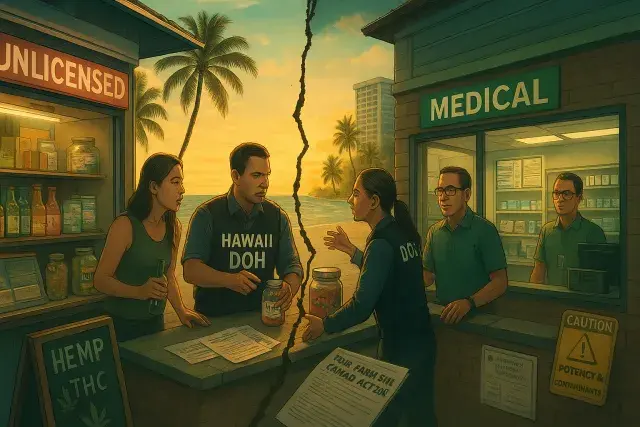
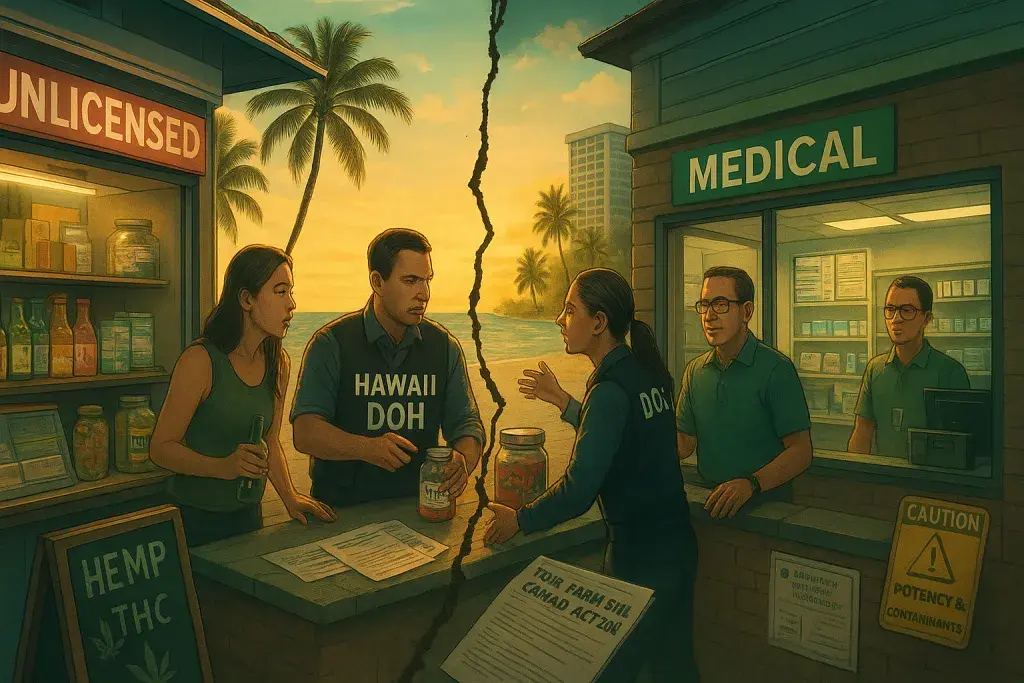
The Hawaiʻi Department of Health has moved to shut down retail sales of hemp-derived THC products - pre-rolled cigarettes, gummies, and similar goods that had been sold openly at unlicensed shops across Oʻahu without requiring a medical marijuana card. The enforcement action, now underway at storefronts in Waikīkī and beyond, has triggered a federal lawsuit from at least one retailer and reopened a long-running argument over who gets to sell cannabis products in the state and under what rules.
This is, at its core, a licensing and market-structure dispute dressed up as a hemp-versus-marijuana technicality. Hawaiʻi's medical dispensary system caps the number of licensed operators at eight, each permitted multiple retail locations under statutory conditions. That kind of license scarcity is not unique to the islands - operators in tightly regulated markets nationwide have watched similar dynamics play out, where a small number of incumbents control supply while unlicensed sellers exploit gaps in enforcement. Retail infrastructure matters here too: the same operational backbone that keeps a licensed shop compliant - inventory tracking, compliant packaging, verified lab results - is the kind of system that vendors like the platform behind point-of-sale for South Dakota dispensaries have built entire businesses supporting, precisely because regulators everywhere are demanding it. point-of-sale for South Dakota dispensaries
The mechanism behind Hawaiʻi's crackdown traces back to a federal quirk. The 2018 Farm Bill legalized hemp containing no more than 0.3% delta-9 THC by weight, a threshold meant to distinguish industrial hemp from marijuana. In practice, that low bar left room for manufacturers to concentrate THC into gummies, beverages, and smokable products that deliver intoxicating effects while technically complying with federal hemp law. Hawaiʻi's own 2020 law permitted hemp cultivation but never authorized selling hemp-derived THC products at retail - a distinction that unlicensed sellers either missed or ignored for years while the market grew underneath regulators' notice.
Why Enforcement Timing Matters for Operators
Act 269, passed this year with support from law enforcement and several licensed dispensaries, gave the Department of Health's Office of Medical Cannabis Control and Regulation new authority: retailers must now register with the state and submit to inspection by cannabis control agents, who can order specific products pulled from shelves. Before this, the office's jurisdiction stopped at the licensed dispensary system's edge. Unlicensed shops operated in a gray zone regulators couldn't touch.
For licensed dispensary operators, the shift matters financially. Testimony cited in legislative correspondence suggested licensed shops were capturing only a fraction of total cannabis retail spending in the state, with the bulk flowing to unregulated sellers offering lower prices without the overhead of lab testing, seed-to-sale compliance, or dispensary-grade security. That's the economic logic behind why licensed operators lobbied hard for enforcement - every dollar spent at an unregistered kiosk is a dollar that never touches the taxed, tracked, compliant supply chain those operators are required to maintain.
The Bigger Question Regulators Still Haven't Answered
Critics of the crackdown, including at least one plaintiff now suing in federal court, argue Hawaiʻi is using consumer-safety language to protect an oligopoly rather than genuinely protect consumers. Untested hemp products carry real risk - inconsistent potency, unverified contaminant screening, unclear dosing - and that risk is legitimate grounds for regulation. But critics note the state hasn't expanded licensing to meet demand; it has simply let existing licensees add locations while blocking everyone else.
A federal redefinition of hemp signed into law this year may render much of this moot by closing the loophole that allowed intoxicating hemp products to proliferate nationally in the first place. Until that takes effect, though, Hawaiʻi's dispute offers a preview of the tension every state faces when federal hemp law and state cannabis licensing collide: consumer protection and market protectionism can look identical from the outside, and regulators rarely explain which one they're actually enforcing.