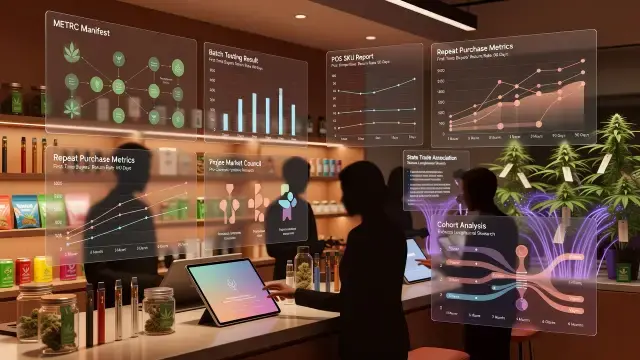
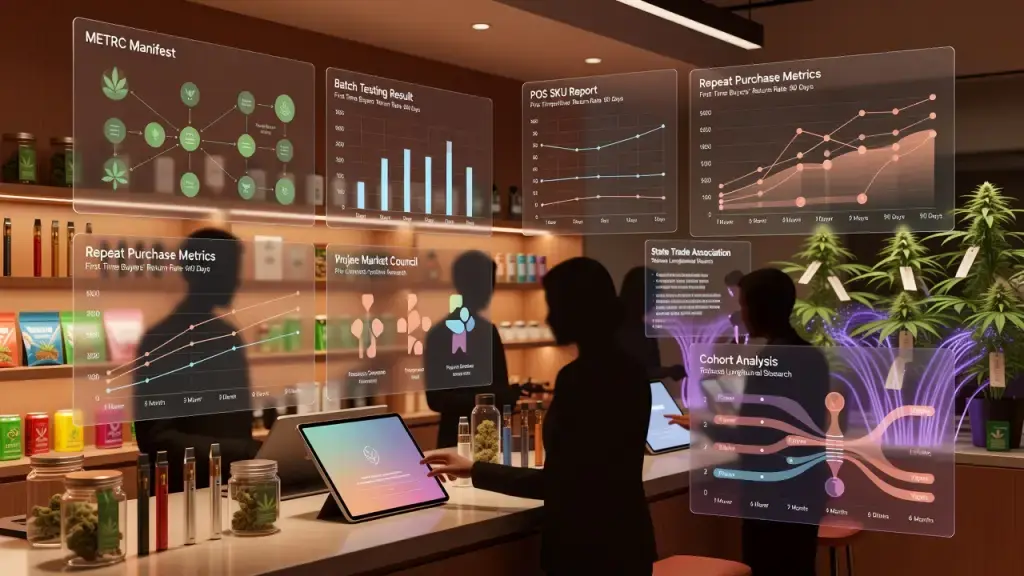
Walk into most dispensary back offices and you will find a wealth of compliance data: METRC manifests, batch testing results, POS reports broken down by SKU. What you will rarely find is a clear answer to why a given customer bought what they bought, or whether they will buy it again. Cannabis tracks its plants obsessively. It barely tracks the people who buy them.
That gap matters more than it might seem. State traceability systems exist to prevent diversion and confirm chain of custody, not to explain purchasing behavior. Monthly sales totals published by state regulators tell an operator how the category is trending, not whether a particular shopper is a repeat customer or a one-time trial buyer who walked out the door and never came back. Three older, more heavily regulated consumer categories figured this out decades ago, and cannabis retailers don't have to start from zero.
What Wine Figured Out About Motivation
Wine's Project Genome research found something counterintuitive: the biggest obstacle to a sale wasn't price or selection, it was confusion. A meaningful share of wine buyers avoided the category altogether because they worried about picking wrong. Translate that to a dispensary budroom and the implication is direct. A menu optimized for the regular who already knows strain lineage and terpene profiles may be quietly failing the customer standing three feet away who just wants something that won't overwhelm them.
Budtenders already ask informal versions of this question every shift. The fix is formalizing it. One optional field at loyalty sign-up or checkout, asking what the customer is shopping for today, turns anecdote into segmentation data that POS systems were never built to capture on their own.
Repeat Purchase Is the Metric Dispensaries Skip
Packaged goods companies built an entire research industry around a simple idea: watch the same households over time and see what they buy again. A dispensary doesn't have a national consumer panel, but it has something almost as useful sitting inside its loyalty database and largely unused. Most retailers track visit frequency. Few track product-level repeat purchase.That distinction matters for wholesale buyers and category managers alike. A new edible or vape SKU can post strong first-month numbers purely on trial, and still be a dud if nobody comes back for a second package. Measuring how many first-time buyers of a given batch or product line return within sixty or ninety days turns a vanity sales spike into an honest read on product-market fit, long before a reorder decision gets made.
Tracking How Format Preferences Shift
Tobacco researchers learned the value of following individuals across years rather than surveying new people each time. Cannabis's own longitudinal research, including the International Cannabis Policy Study, uses a repeat cross-sectional design, which is excellent for tracking market-wide shifts but cannot show how one customer's habits evolve.Operators don't need a federal study to approximate this. Group customers by the format of their first purchase, flower, vape, edible, beverage, then check what that same cohort is buying six months later. Format migration is already happening across the adult-use and medical markets; most retailers only see it after the category mix has already shifted on the shelf, which is too late to adjust purchasing or wholesale commitments.
Pre-Competitive Research as a Small Operator's Advantage
Wine Market Council exists because independent wineries couldn't afford in-house research departments on their own, so the industry pooled resources. Cannabis has the same cost structure problem, arguably worse given 280E tax exposure and license caps that limit scale in many states. Single-store operators and social equity licensees are the least likely to have a data science budget and the most likely to benefit from shared, anonymized consumer research commissioned through state trade associations.
- Add one motivation-based question at checkout or loyalty enrollment
- Track repeat purchase by product, not just by store visit
- Cohort customers by first purchase format and revisit at six months
- Push state associations to fund shared, anonymized consumer research
None of this requires new legislation, a federal data-sharing mandate, or a bigger compliance budget. It requires treating the customer record with the same discipline cannabis already applies to the product record. The industry has spent years proving it can track a plant from seed to sale. The next phase is tracking why the person on the other side of that sale keeps, or doesn't keep, coming back.