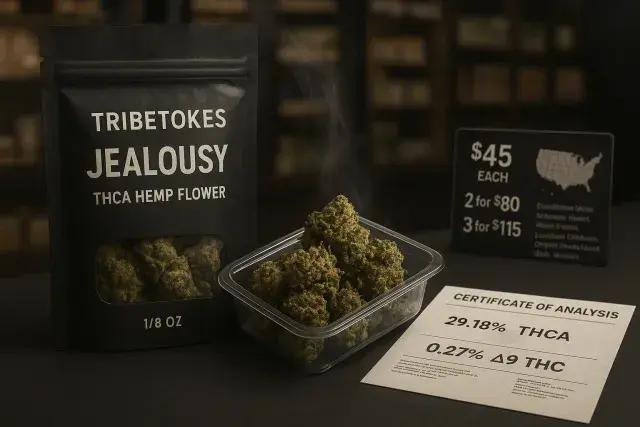
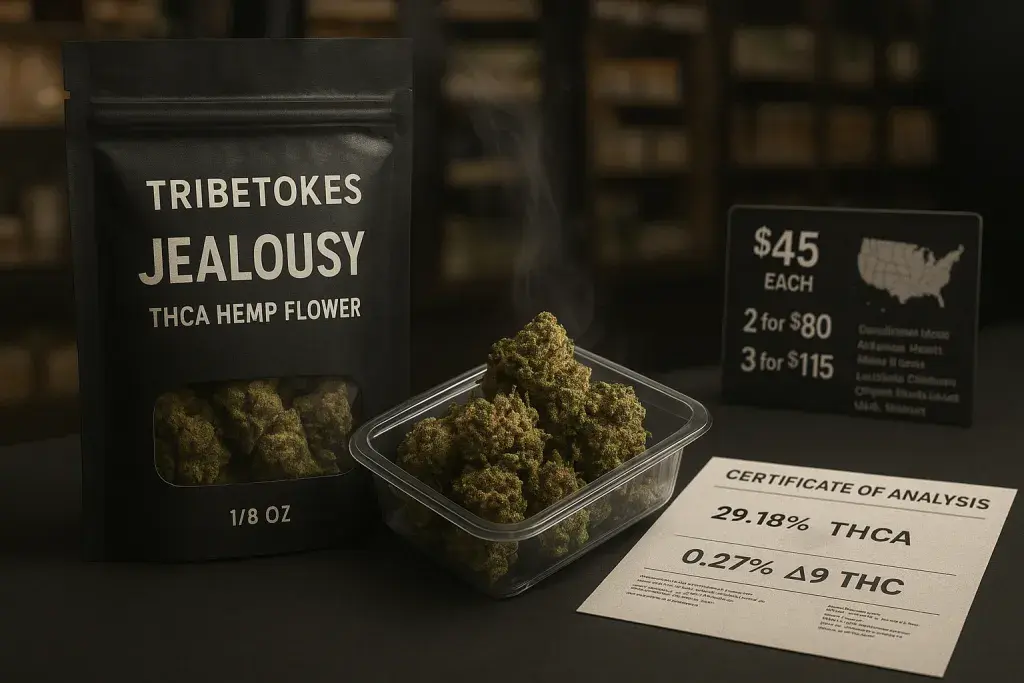
Premium THCA hemp flower has carved out a distinct shelf position in the regulated cannabis-adjacent market - priced and packaged like dispensary product, shipped through e-commerce channels, and subject to an entirely different compliance framework than state-licensed flower. That gap between premium pricing and actual product quality is where consumer trust either holds or breaks. TribeTokes' Jealousy THCA Flower, an eighth tested at 29.18% THCA and 0.27% Delta-9 THC, offers a useful case study in what separates hemp-derived flower that justifies its price from flower that merely looks the part.
The hemp-derived cannabinoid market operates outside most state-licensed retail systems, which creates a due-diligence burden that falls squarely on the consumer - and, increasingly, on the operators who stock adjacent categories. Retailers evaluating whether to carry THCA flower alongside licensed product need to think about COA transparency, packaging integrity, and the kind of freshness indicators that signal a supply chain that actually handles product carefully. Those standards don't disappear because a product ships direct-to-consumer rather than through a licensed dispensary. For operators using dispensary software in Arizona or other regulated markets, tracking which product categories live inside versus outside the licensed framework is exactly the kind of inventory distinction that matters for compliance and audit purposes.
What the Jealousy eighth demonstrated, before anything was consumed, was that packaging choices carry real operational meaning. The nugs arrived sitting in a plastic tray inside the outer bag - a detail most brands skip - which meant the flower arrived intact rather than compressed into shake. That is not a cosmetic decision. Flower that shows up crushed loses moisture, aroma, and visual appeal before it ever reaches the end buyer. Brands that invest in structural packaging are implicitly telling you something about how they think about the post-harvest supply chain, and that matters when premium pricing is part of the pitch.
What Freshness Actually Signals in THCA Flower
Potency numbers on a label only tell part of the story. A THCA percentage in the high 20s is a strong result, but lab figures are a snapshot taken at a specific point in the product's life. By the time flower reaches a consumer, what matters is whether the handling between cure and delivery preserved what the lab measured. Dry, brittle flower with a faded nose is a freshness failure regardless of what the sticker says. The Jealousy eighth held moisture well enough to avoid that problem - the aroma on opening registered as sweet pepper with earthy depth, and that profile carried forward into the grind, which is usually where underfed flower goes quiet.
That consistency - aroma in the bag, aroma after grinding, flavor in the smoke - is the functional test that separates flower treated carefully through the supply chain from flower that was simply packaged well. Smoke that turns flat or harsh partway through a bowl points to moisture loss or post-harvest mishandling. Here, the earthy-pepper character stayed present through the inhale, with a smoother finish on the exhale that tracked with the strain's Gelato lineage. Not the loudest expression of Jealousy available, but coherent - the nose matched the smoke, which is more than can be said for a lot of product in this category.
Pricing, Transparency, and the THCA Retail Calculus
At $45 for an eighth, TribeTokes positions Jealousy at the premium end of hemp-derived flower retail. Volume pricing brings that down - two eighths at $80, three at $115 - but the entry point is real. Whether that price holds up depends entirely on whether the product delivers on its positioning, and positioning in this category rests on three things: lab transparency, freshness, and packaging integrity.
Lab transparency is the one operators and consumers can verify before purchase. TribeTokes makes COA data accessible, and the tested numbers align with premium pricing expectations. That's the baseline. The packaging choices - tray insert, visual freshness, nug structure on arrival - are harder to evaluate before you open the bag, which is why first-impression consistency matters so much for repeat purchase behavior. A brand that delivers on presentation once needs to deliver on it consistently across batches for the premium price to stick.
There is also a compliance layer worth noting. TribeTokes lists a set of states where its THCA products cannot ship - Arkansas, Hawaii, Idaho, Kansas, Louisiana, Oklahoma, Oregon, Rhode Island, Utah, and Vermont among them. That restriction list reflects the patchwork of state interpretations around hemp-derived cannabinoids, and it will likely continue shifting as state legislatures and regulators revisit how products with meaningful psychoactive potency are classified and controlled. Retailers and buyers in those markets cannot access this product through direct-to-consumer channels, which underscores that the THCA hemp category is not a fully open national market - it is a legally variable one, and what's compliant in one state may be restricted or prohibited in another.
What This Means for Retailers Watching the Category
The THCA flower market is asking operators in legal states a question they cannot ignore much longer: how does premium hemp-derived flower fit alongside, or compete with, licensed dispensary product? The price points are similar. The potency numbers are comparable. But the regulatory frameworks are entirely different - no seed-to-sale tracking, no METRC integration, no state-mandated testing cadence, no licensed distributor in the chain.
For licensed retailers, that distinction creates both a competitive pressure and a compliance clarity. They cannot simply add THCA hemp flower to the licensed inventory and run it through the same POS workflow. It exists in a different category, with different labeling requirements, different age-verification implications in some jurisdictions, and different tax treatment. The Jealousy eighth is a solid product in a category that is genuinely maturing - better packaging, better lab access, better supply chain thinking than hemp flower had two years ago. But maturity in product quality does not automatically translate to regulatory clarity, and operators paying close attention to this space should be tracking both.