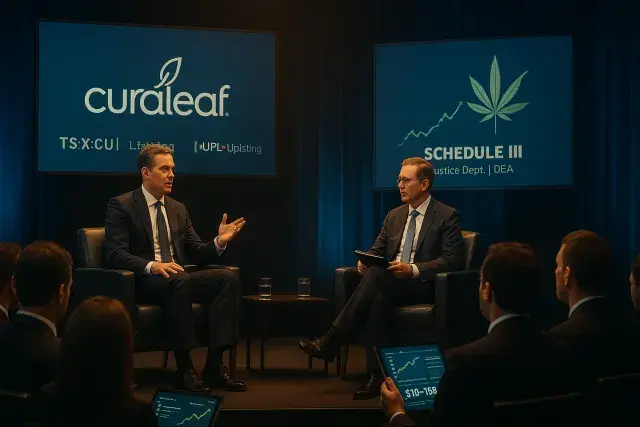
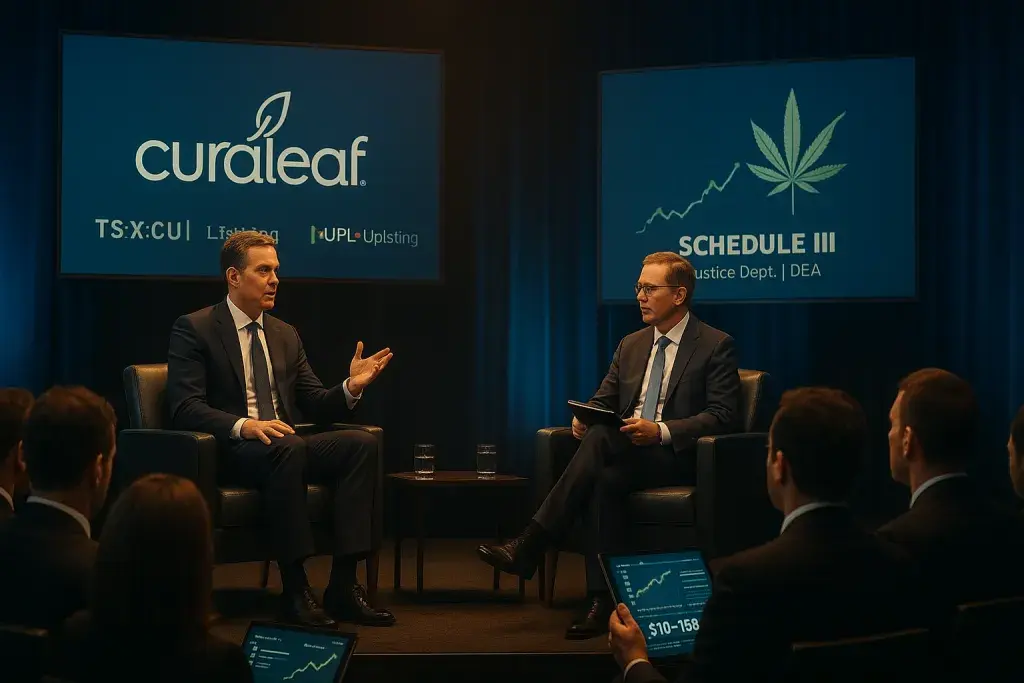
Boris Jordan did not announce a new funding round or a major exchange listing at the Igniteit Cannabis Capital Conference in Chicago. What the Curaleaf chairman and CEO told a packed fireside chat, in a conversation with Seaport Global's Jack Mascone, was more modest than that - and more telling. Institutional equity investors, he said, are now willing to sit down and have a conversation with cannabis operators. Not invest. Just talk. For an industry that has spent the better part of a decade financing itself largely outside traditional capital markets, that distinction carries real weight.
The gap Jordan is describing is structural, not incidental. Institutional lenders have been willing to underwrite debt to cannabis companies for years - a counterintuitive dynamic for a growth industry, where equity investors typically absorb more risk than fixed-income buyers. The reason equity has lagged isn't just federal illegality in the abstract; it's compliance departments. Portfolio managers at institutional funds often need internal sign-off before they can purchase a cannabis stock, regardless of which exchange it trades on. Platforms like indicaonline.com track how POS infrastructure and compliance systems have matured at the dispensary level, but the bottleneck for equity capital has sat further upstream - inside the legal and compliance functions of the asset managers themselves, not inside the cannabis companies seeking investment.
Kraig Fox, who has spent 35 years building businesses through traditional institutional public equity and bank lending, noted in comments circulating after the session that Jordan's candor on the point was not lost on him. "That is a subtle but significant sign of progress," Fox said. "Planning your uplisting strategy on a pre-engaged book of equity investors who can support your stock and story long term is chess while others play checkers." That framing matters because it reframes what looks like a modest update into deliberate capital strategy - Curaleaf is working to line up a committed equity investor pool before any move to a major U.S. exchange, rather than uplisting first and hoping demand materializes afterward.
Uplisting Without a Built-In Shareholder Base Is a Known Risk
The sequencing question is one that any multi-state operator thinking about a Nasdaq or NYSE listing has to take seriously. A stock that moves to a major exchange without institutional holders ready to support it can be left exposed - thin trading volume, susceptibility to short sellers, and a valuation that reflects retail investor sentiment more than fundamental business performance. Jordan has been explicit that Curaleaf intends to anchor its uplisting with large institutional holders comparable to those that participated in the company's 2018 IPO, and he has drawn a clear line between that approach and the path taken by rivals who have moved to restructure or separate their U.S. adult-use businesses to accelerate exchange access.
Curaleaf is already listed on the Toronto Stock Exchange. It has made clear it intends to keep its U.S. and European operations under a single corporate roof rather than pursue a carve-out strategy. The European business - built to EU GMP standards across a market of more than 700 million people and valued by Jordan at roughly $1 billion - is part of the company's scale argument to institutional investors and, by his account, a part of the business that U.S. retail-investor-driven markets have not properly priced in. Whether that argument lands with institutional equity desks depends heavily on what happens next in Washington.
Federal Rescheduling Sets the Clock for Capital Markets Strategy
The Justice Department's April order moved FDA-approved and state-licensed medical cannabis from Schedule I to Schedule III, and an expedited DEA hearing on broader rescheduling was set for June 29. Jordan has said he wants that hearing's outcome, plus IRS and Treasury guidance and clarity around pending litigation, before Curaleaf moves forward on a U.S. exchange listing. The logic is straightforward: institutional compliance departments need a more settled federal picture before they can clear cannabis equity exposure internally. Rescheduling alone doesn't flip that switch, but it changes the conversation - and the internal justification frameworks those compliance teams rely on.
For operators across the industry, the 280E tax burden - which disallows standard business deductions for companies trafficking in Schedule I or II substances - remains one of the most concrete financial arguments for rescheduling. Movement to Schedule III would open the door to normal business deductions, materially improving the economics of licensed cannabis businesses, including the large multi-state operators whose financials institutional investors scrutinize most closely. That's not a minor administrative update; it's a direct line item on the income statement for every vertically integrated operator in the country.
Consolidation Is the Other Argument Jordan Is Making to Capital Markets
Jordan also used the Chicago session to argue that the industry's pricing environment - where discounting has become a survival reflex rather than a deliberate margin strategy - is unsustainable without consolidation. He put the target platform size at $10 billion to $15 billion in value to genuinely attract institutional capital, and he estimated that combining larger operators could unlock between $150 million and $200 million in synergies. The comparison he reached for was the earlier consolidation waves in alcohol and consumer packaged goods that eventually produced more stable, durable businesses.
That framing is worth sitting with. Alcohol's path to institutional respectability - and to standardized retail compliance frameworks, tiered licensing structures, and eventually major exchange listings - took decades and a significant amount of consolidation that pushed smaller operators out of the market. Cannabis is not on that same timetable, but the structural logic Jordan is describing is recognizable: too many undercapitalized operators competing on price in a market where wholesale pricing has compressed and excise tax structures in many states make thin-margin retailing genuinely painful. The companies that survive that shakeout are likely to be the ones that have invested in governance, compliance infrastructure, and operational discipline - the qualities, not coincidentally, that institutional investors say they need to see before they move from talking to buying.
None of this guarantees that institutional equity money floods into cannabis stocks in the near term. Compliance departments still have to sign off internally, rescheduling still has to clear a hearing process and possible legal challenges, and the sector's investor base remains thin relative to its scale. But the fact that the CEO of one of the world's largest cannabis companies now treats a returned phone call from an institutional investor as newsworthy says everything about where this industry has been - and exactly how much distance remains between where it is and where the most deliberate operators are clearly trying to take it.