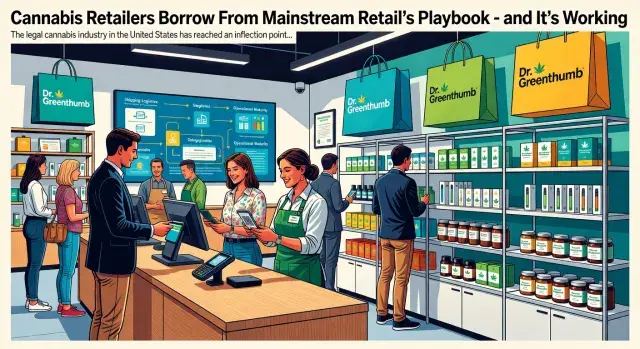
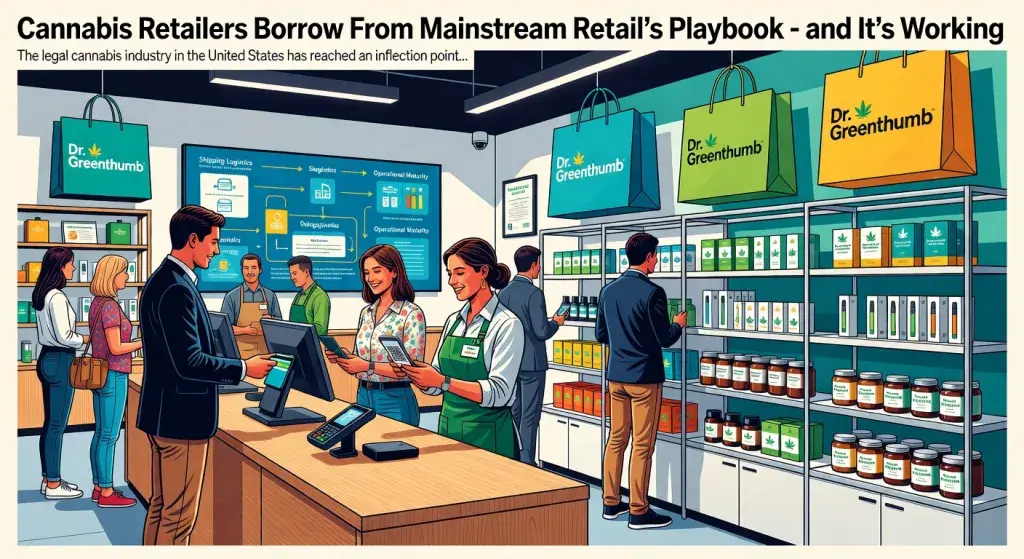
The legal cannabis industry in the United States has reached an inflection point that has little to do with legislation and everything to do with operational maturity. Dispensaries and cannabis brands are now adopting the same licensing structures, shipping logistics, and brand collaboration strategies that have long defined conventional retail. The result is an industry that increasingly looks, operates, and thinks like any other consumer vertical - with a few notable regulatory wrinkles.
The Licensing Model Comes to Cannabis
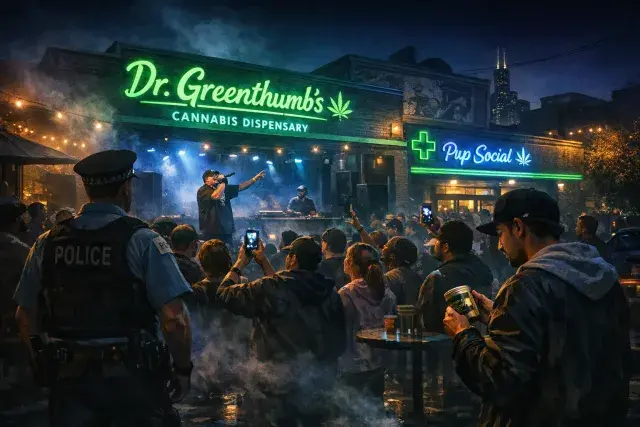
Franchise and licensing structures are table stakes in food service, hospitality, and apparel retail. Cannabis is catching up. Dr. Greenthumb, the retail brand founded by Cypress Hill frontman B. Real, was an early mover in applying licensing to dispensary expansion. But the more instructive example right now is Cheech and Chong's Cannabis Company, the venture from comedians Cheech Marin and Tommy Chong, which has adopted what it calls a "reverse licensing model."
Here's how it works: independently owned dispensaries partner with the Cheech and Chong brand, gaining access to its retail design, national marketing infrastructure, and technology stack - while retaining full ownership and operational autonomy. Think of it less as a franchise and more as a brand overlay. The company has deployed Flowhub, a cannabis-specific POS and retail operations platform, across its partner stores. Flowhub gives individual operators point-of-sale functionality, inventory management, compliance reporting, and customer engagement tools, while giving corporate centralized access to aggregate data across locations. The platform's API-based architecture also plugs into Headset, a real-time analytics engine already in use by the retailer.
That last detail matters. Centralized data visibility across a distributed network of independent stores is the kind of infrastructure that took conventional retail decades to build. Cannabis is compressing that timeline considerably.
Shipping: From Cash Transactions to E-Commerce Fulfillment
For years, cannabis retail was synonymous with cash. No credit cards, no digital payments, no shipping - just walk-in transactions in jurisdictions that allowed them. That era is receding fast.
Consider Edibles.com, an e-commerce platform operated by the parent company of Edible Arrangements - yes, the fruit bouquet people. Since fall 2025, the site has offered premium low-dose, THC-infused hemp products with direct shipping to consumers 21 and older in all legal U.S. states. According to Edible Brands, the service reaches more than 65% of the country through independent fulfillment operations that automatically route orders via the fastest available path, whether that's national shipping or same-day local delivery. The logistics sophistication here is not trivial. It mirrors the fulfillment optimization that mainstream e-commerce retailers have spent billions perfecting.
Then there's Brez, a THC- and CBD-infused functional beverage brand, which has made its products available through DoorDash delivery in more than 30 states. A cannabis-infused drink, ordered through a delivery app, arriving at your door alongside pad thai. That sentence would have been absurd five years ago.
Brand Collaborations That Mirror the Mainstream
Celebrity-brand collaborations are as old as retail itself. What's new is seeing them executed in cannabis with the same precision - exclusive product drops, collector's packaging, coordinated cross-channel promotion - that you'd expect from a sneaker collab or a limited-edition vinyl release.
In summer 2025, Method Man of Wu-Tang Clan partnered his Tical cannabis brand with Amsterdam-based Zamnesia, a digital retailer of cannabis seeds and related products operating across Europe and the U.S. The collaboration featured eight premium Tical cannabis seeds available exclusively through Zamnesia, promoted under the tagline "We Bring the Buzz" via both Method Man's channels and Zamnesia's global network. Drop format. Exclusive packaging. Scarcity marketing. The playbook is indistinguishable from what you'd see in streetwear or collectibles - except that the product in question carried criminal penalties in most jurisdictions not that long ago.
The Bigger Picture
With 40 states and the District of Columbia now operating medical marijuana programs, 24 states permitting some form of recreational sale, and CBD legal to varying degrees everywhere, the regulatory patchwork remains complex. But the commercial infrastructure is hardening. President Trump recently directed the attorney general to accelerate rescheduling marijuana to Schedule III of the Controlled Substances Act - a move that, if completed, would open the door to broader research and potentially ease federal restrictions further.
None of this means cannabis retail has fully arrived. Compliance burdens remain heavy. Banking access is still constrained. Interstate commerce barely exists. But the operational gap between cannabis and conventional retail is narrowing - not through regulatory reform alone, but through the quiet, unglamorous adoption of the same tools and strategies that power every other consumer industry. Licensing models, fulfillment routing, POS platforms, API integrations, data analytics, brand partnerships. The infrastructure of normal commerce. That, more than any single piece of legislation, is what maturity looks like.